
By: Analee Dubbs (clinical intern)
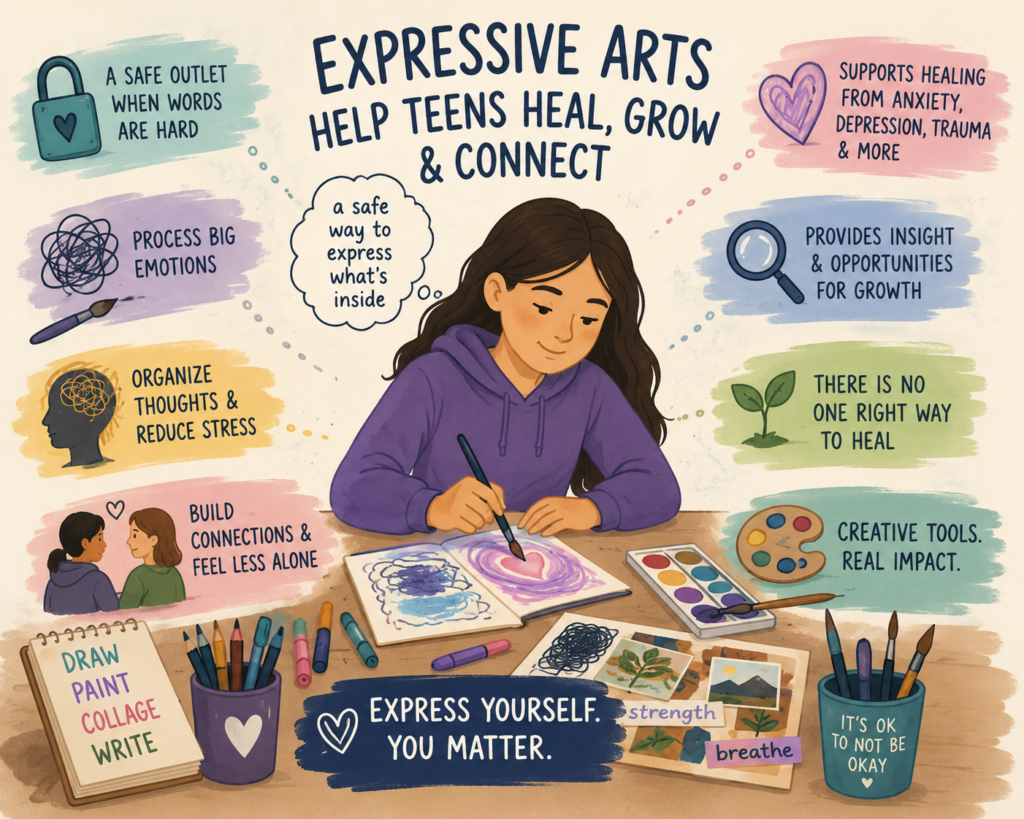
When people hear that we use painting, coloring, drawing, or collaging in our Intensive Outpatient Program (IOP), they sometimes assume it is just a fun activity or way to fill the 3 -hour groups. In all reality, expressive arts are one of the most valuable tools we use with our teen/tween clients. For many young people, creative expression in the therapeutic space can open doors that conversation alone cannot.
Adolescents do not always have the words to express what they are feeling. Honestly, a lot of adults do not either! Emotions like sadness, anger, anxiety, or shame can be difficult to name, let alone share out loud in a group setting. For a 10-year-old who is still learning emotional awareness or a 15-year-old who is scared of being judged, being asked to straight out “talk about your feelings” can feel intimidating. Expressive arts offer another path in these situations to communicate in a way that feels safe and authentic.
Sometimes clients who say very little in group reflection activities can communicate a great deal through their artwork. A page filled with chaotic lines, dark colors, heavy pressure, or specific symbology can tell us that something deeper is happening beneath the surface. A collage focused on perfectionism like ensuring every picture is evenly placed and the same color scheme can also open doors to conversations that may not have happened through a standard check-in. Art gives young people a way to show us what they may not know how to say, especially if they are willing to then share the art with the group.
This is especially important in an IOP setting, where they are often working through anxiety, depression, trauma, family struggles, emotional dysregulation, or low self-esteem. Especially with coming straight from school, many arrive to group carrying stress both in their minds and in their bodies. Before they can engage in deeper therapeutic work, they often need activities that help them feel grounded and safe. Creative activities support this process. Coloring pages are provided during the duration of the group, which can be used to calm the nervous system. Painting can provide a healthy release of emotions that feel too big to hold on to. Drawing can help externalize thoughts that they do not have the strength to verbalize. Collaging can help organize scattered thoughts and create patterns out of emotions or experiences.
Expressive arts are also incredibly helpful in the group setting because they reduce pressure. Sitting in a circle and talking about feelings can feel overwhelming and vulnerable for most teens and tweens. Having an activity to do while connecting or listening to music shifts the
focus away from making eye contact or speaking on the spot when called on. This often helps those who come to group feeling more anxious or disconnected to participate and do so more comfortably. There is something powerful about sitting in a room doing an art activity with others. This can help build connections between group members by realizing they are not alone and creating encouragement in participation.
As clinicians, expressive arts provide insight. This is not because we are necessarily analyzing every drawing or assigning meaning to every color choice, but we instead look for themes, patterns, and opportunities for deeper exploration. We stay curious and ask questions, allowing what feels important to the teen or tween to come up. Often the meaning comes from their own interpretations, not ours.
Some may say the most important aspect of expressive arts is reminding young people that there is no one right answer or way to heal. Some clients process through talking, some process through movement or music, and some may process through writing. Many need a combination of these approaches, and our job as clinicians is to meet them where they are and offer the tools to see what fits best.
At Simply Teens Outpatient, expressive arts are not a “filler” activity, but a truly meaningful part of treatment. When we give young people an array of creative ways to express what is happening inside, we often discover deeper ways to communicate and learn how to better
process what they are experiencing.