
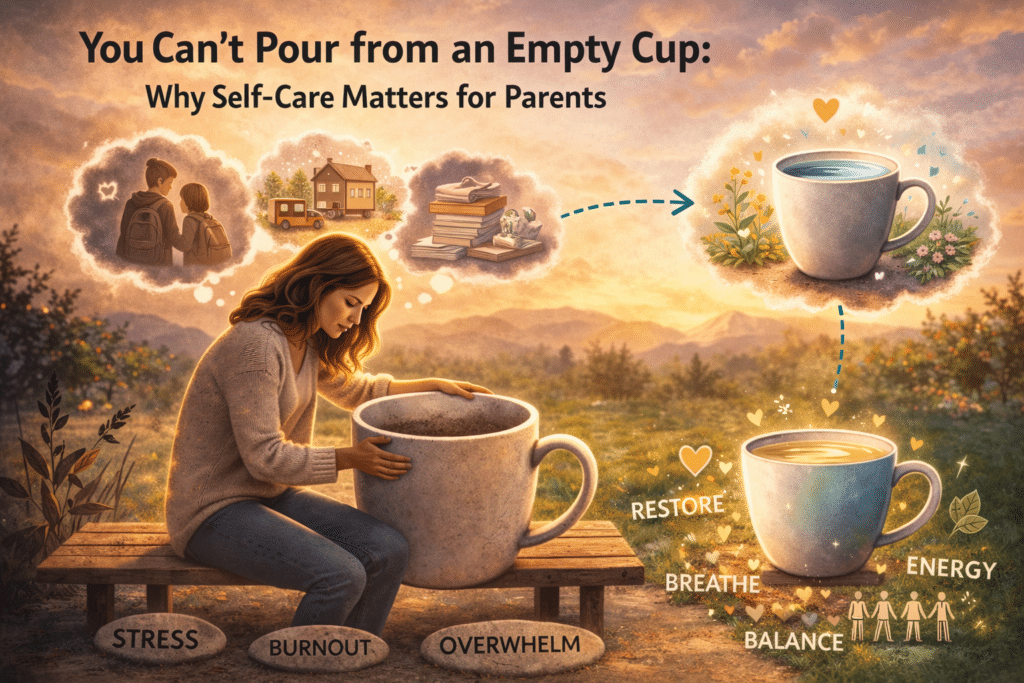
Parenting can feel overwhelming, especially when a teen is going through a tough time. Between school, activities, work, and household responsibilities, there may be very little time left for personal care or even a moment of stillness. Many parents naturally prioritize their teen’s needs out of deep care, often placing their own well-being last. While this selflessness is admirable, it can leave parents feeling drained and stretched thin. Caring for oneself is not a luxury or a sign of selfishness. It is essential for maintaining energy, emotional regulation, and the ability to be fully present for teens. Without it, daily demands can feel heavier, and the capacity to nurture effectively may diminish.
Why Self-Care Helps
Stress, fatigue, and past experiences of trauma can make it harder to respond calmly and thoughtfully. Teens are sensitive to the energy around them, and tension in the household can leave them feeling unsettled or uncertain. Taking time to restore energy or “refill your cup” allows parents to feel grounded and emotionally available, which supports calmer, more intentional interactions.
Self-care is not about adding tasks to an already full schedule. It is about reducing the strain of existing responsibilities so daily challenges feel more manageable. Even small, intentional actions can make a meaningful difference, helping parents navigate stress without burning out, which benefits both the parent and teen.
Modeling self-care also teaches teens that emotions are valid, manageable, and worth attention. When moments of pause, breathing, or seeking support are present, it shows that prioritizing well-being is a normal and healthy part of life.
Simple Ways to Restore Energy
Self-care doesn’t need to be complicated or time-consuming. Small, practical practices can help maintain balance and reduce stress:
● Move the body: Stretch, walk, dance, or shake out tension. Even brief movement can restore energy.
● Pause and breathe: A minute or two of deep breathing can recenter the mind and body.
● Connect with someone trusted: Talking with friends, family, or a support group can help release stress and foster connection. Seeking support is not a sign of weakness.; it is a way to lighten the load.
● Engage in something enjoyable: Reading, listening to music, or hobbies provide moments of refreshment.
● Create micro-breaks: Short moments of quiet, sunlight, or gentle stretches can recharge without adding tasks to the day.
These small actions are not additional responsibilities, they are ways to support emotional balance, reduce strain, and maintain a calm presence. Over time, these moments accumulate, helping parents navigate daily life with steadiness and care.
Parenting and Trauma
Parenting can feel especially challenging when past stress or trauma is present. Trauma can affect the nervous system, making emotional regulation and consistent responses more difficult. Everyday stress may even feel magnified. Intentional self-care provides opportunities for small resets, helping parents respond thoughtfully rather than reactively.
Acknowledging feelings without judgment is essential. Frustration, sadness, fatigue, and worry are normal when parenting is demanding. Trauma-informed self-care is not about pretending everything is fine. It is about noticing emotions, responding with compassion, and taking steps that support well-being.
What Matters Most
Self-care is essential for sustaining energy, patience, and presence. Even brief moments of restoration can make a meaningful difference in how parents respond to challenges and connect with their teen. Prioritizing well-being reduces strain, supports emotional well-being, and models healthy coping for the whole family. Caring for oneself is a vital part of caring for others.